THE IMMACULATE CONCEPTION
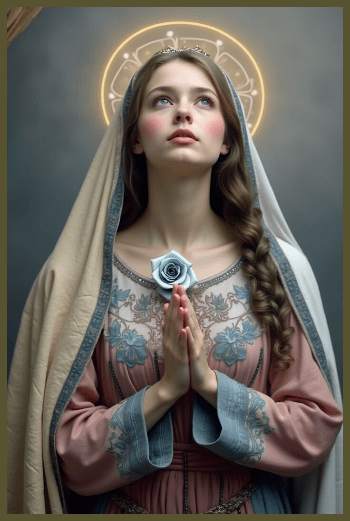
I will greatly rejoice in the Lord,
and my soul shall be joyful in my God:
for he hath clothed me with the garments of salvation:
and with the robe of justice he hath covered me,
as a bridegroom decked with a crown,
and as a bride adorned with her jewels.
Isaiah 61, 10
And Mary said,
“My soul glorifies the Lord, and my spirit rejoices in God my Savior,
for he has been mindful of the humble state of his servant.
From henceforth all generations shall call me blessed;
for He who is mighty has done great things to me,
and holy is His name.”
Luke 1:46-49
Isaiah prophesied during a tumultuous time for the people of Israel. The original audience faced destruction, exile, and oppression. After the fall of Jerusalem in 586 BCE, many Israelites were taken captive to Babylon. The themes of Isaiah often revolve around hope, restoration, and the promise of a better future for a downtrodden people. In this verse, the speaker expresses profound joy and gratitude to God for salvation and justice. The imagery of being clothed in garments of salvation and righteousness indicates that God had acted to restore His people. The notion of clothing symbolizes identity and transformation; just as one puts on clothes, the speaker describes how God has given them a new identity through divine favor and grace.
The comparison of the speaker to a bridegroom with a crown and a bride adorned with jewels suggests joyfulness and celebration. These images denote the beauty and purity of a covenant relationship with God. In cultural contexts, weddings were significant social events that symbolized joy, new beginnings, and covenantal faithfulness.
Moreover, the passage signifies not only physical restoration after exile but also spiritual renewal. It conveys the message that God’s intervention brings joy to His people, highlighting a relationship in which joy and righteousness are paramount. This reflects a broader biblical theme where God’s actions often lead to healing and rejoicing among His people. Isaiah 61 is usually viewed as a messianic passage that foretells the coming of one who will bring true liberation and healing. This background provides an additional layer of meaning, particularly for Christians who see parallels between this passage and the life and mission of Jesus Christ.
In the context of Israel, “the Daughter of Zion” signifies the collective identity of the people of Jerusalem and, by extension, the Jewish nation. The language of joy and celebration in Isaiah points to a future hope of restoration and redemption. Israel, through its tumultuous history, often experienced suffering and exile but always held onto the promise of God’s salvation.
The “garments of salvation” and “robe of justice” can be interpreted as God’s provision for His people. These garments signify a transformative moment for Israel, in which they are not merely covered but richly adorned, symbolizing both protection and an exalted status among nations. The imagery of the bridegroom and bride also reflects the covenant relationship between God and Israel, where God is depicted as a loving partner who beautifies His chosen people.
The connection to the Virgin Mary is equally significant. Christian theology often regards Mary as the ultimate embodiment of Israel’s hope realized in the Messiah. Just as Israel is clothed with salvation and justice, Mary is seen as the bearer of Jesus, who brings these very gifts to humanity. Her acceptance of God’s will signifies a new beginning, echoing Israel’s call to faithfulness. The metaphor of a bride adorned with jewels resonates deeply with Mary’s role. She is often referred to as the new Eve, and Spouse of the Holy Spirit, a figure of purity and grace, reflecting the hope and promise found within Israel. The joy expressed in Isaiah is also evident in the Magnificat (Luke 1:46-55), where Mary exults in God’s salvation, paralleling the joy of Israel’s restoration.
Furthermore, Isaiah 61:10 is often interpreted as closely linked to the Catholic doctrine of the Immaculate Conception of the Virgin Mary. This biblical passage conveys themes of righteousness, divine favor, and the joy that follows salvation—all of which closely align with beliefs about Mary’s unique and pivotal role in salvation history. Specifically, the verse emphasizes the transformative joy and gratitude that stem from God’s redemptive acts, reflecting the Catholic view of Mary as a model of divine grace and holiness.
The doctrine of the Immaculate Conception holds that Mary was conceived without original sin, a pre-emptive act of divine grace that set her apart from all other humanity. This belief posits that God, in His infinite wisdom, prepared Mary to be the Mother of Jesus Christ by ensuring her purity and sanctity from the very moment of her conception. As such, Mary’s immaculate conception is seen as essential for her ability to accept the Annunciation and bear the Savior.
The connection between Isaiah’s prophetic words and Mary’s purity illustrates the depth of her sanctity and the significant theological implications of her role as the Theotokos, or God-bearer. Many Catholics believe that the reverence for Mary’s purity, foreshadowed in Isaiah’s prophecy, signifies not only her importance in the Incarnation but also the nature of redemption itself. This understanding elevates Mary’s status in Catholic theology, celebrating her as a powerful intercessor who brings believers closer to Christ through her unique grace-filled relationship with God.
In Catholic theology, original sin is understood as the inherent state of sinfulness that marks all human beings at birth, characterized by a lack of sanctity and perfect charity. According to the Catechism of the Catholic Church, original sin is a deprivation of the original holiness and justice intended for humanity, passed down through generations as a consequence of being descendants of Adam and Eve. It is important to note that original sin is not viewed as a personal wrongdoing but rather a condition all humans inherit through natural propagation. As stated in the Catechism of the Catholic Church, this condition does not carry the weight of personal fault for any of Adam’s descendants (CCC, 405).
It is understood that all human beings inherit a connection to Adam’s sin, making us guilty by association due to our shared human nature. This belief extends to Mary, the mother of Jesus, as she shares that exact nature. However, it is believed that God did not hold Mary accountable for the original sins of Adam and Eve. So, she was preserved from the stain of original sin through a unique grace and privilege, attributed to the foreseen merits of Christ. This preservation is viewed not as a contradiction of divine justice, but as a manifestation of divine mercy. Without this divine intervention, Mary would have been conceived in original sin, as she is a human creature, unlike her Son, Jesus, who is a divine person who acquired His humanity from her through the Incarnation by the power of the Holy Spirit.

All individuals descended from Adam are believed to be conceived and born with the condition of original sin, as noted in Psalm 51:7. The Apostle Paul explains this concept in his letter to the Romans, stating, “As sin came into the world through one man and death through sin, and so death spread to all men since all men sinned” (Rom 5:12). He further elaborates that “as one man’s trespass led to condemnation for all men, so one man’s act of righteousness leads to acquittal and life for all men” (Rom 5:18). In this framework, physical death serves as an indication of spiritual death. While physical death is a temporary consequence of humanity’s collective sins against God, it is through Christ’s suffering and death on the Cross that humanity is offered restoration to spiritual life in communion with God. Importantly, the prospect of eternal damnation, or separation from God, is no longer seen as an irreversible fate for humanity.
Original sin is understood as the state of being deprived of supernatural grace. This concept originates in the narrative of Adam, who, upon falling from grace, entered a flawed state and lost the divine life God intended for humanity. As a result of this fall, Adam forfeited the original sanctity and justice with which he was created, reflecting God’s goodness. Since Adam’s fall, all of his natural descendants are believed to be inclined toward evil, a tendency that is evident through the concepts of concupiscence of the eyes, concupiscence of the flesh, and the pride of life. Much like their progenitor, human beings frequently harbor a desire to be like God, but they pursue this aspiration independently and in ways that contravene His will. Such actions can lead to mortal sins, depriving the soul of its inherent sanctity and justice before God, resulting in an additional decline from grace.
Original sin is understood in an analogical sense, characterized as a sin that is “contracted” rather than “committed.” This distinction highlights that it represents a state of being rather than a specific action. Personal sins, in contrast, carry personal fault and guilt. In this context, Mary’s soul is highlighted for its ability to proclaim the glory of the Lord, as she was uniquely graced by God, liberating her from the fallen state of humanity. Unlike the rest of humanity, who inherit a wounded nature from Adam and Eve at the moment of conception, Mary’s human nature was preserved from the harmful moral consequences associated with original sin. Consequently, she was not predisposed to evil. Mary’s desire to be like God was fully aligned with God’s will, reflecting her identity as a daughter created in His image and likeness, while remaining mindful of His sovereignty over her life.
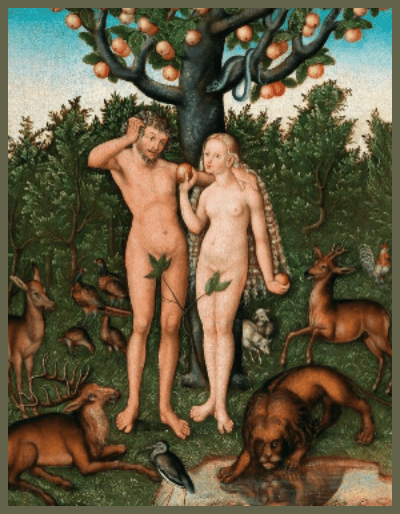
The redemption of humanity is articulated through the concept that God restored sanctifying or justifying grace to all people through Christ’s merits. This divine act of mercy is essential because, without it, humanity could not regain the supernatural state originally intended by God. While the grace of redemption effectively removes the guilt of Adam’s original sin, the lingering moral and physical consequences of that sin persist even after baptism. Dom Bruno Webb offers a metaphorical perspective on original sin, describing it as a “disease” that has infected the foundational “cell” of the human body. This condition affects every aspect of human existence, arising from that original cell. Consequently, original sin can be likened to a “poison” that has infiltrated every member of the human race. As such, Adam’s sin is considered a shared legacy inherent to all of humanity.
Mary is acknowledged as a member of the human family, but she was uniquely shielded from the effects of original sin and the disease. God granted this protection through the doctrine of the Immaculate Conception, which holds that she was conceived without original sin. This extraordinary privilege was given to her in light of her significant role as the Mother of God, with Jesus’ merits foreseen.
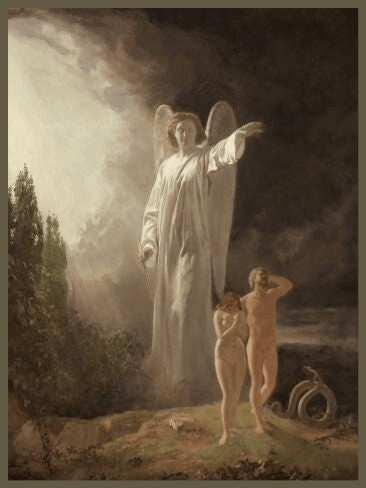
Mary, unlike Eve, maintained her original grace and innocence before God (Lk 1:28). Her soul was characterized by a deep glorification and magnification of the Lord (Lk 1:46), indicating that she possessed no selfish inclinations or excessive self-love. This purity of heart inherently shielded her from sin, which is central to the concept of original sin—an inner disposition that leads to personal acts of sin. The typical effects of original sin, including lust of the eyes, lust of the flesh, and pride, did not affect Mary because God protected her from all forms of sin. The First Letter of John states that “fear has to do with punishment,” whereas “love drives out fear” (1 Jn 4:18). During the Annunciation, the angel Gabriel assured Mary that she need not fear, as she had found favor or grace with God (Lk 1:30). Her impeccable love for God meant she had no reason to fear Divine justice. By the time the angel visited her, she had already received the gifts of righteousness and justice through the infusion of sanctifying grace into her soul.
Mary is celebrated in Christian theology as the Mother of God, and her relationship with God is often characterized by her unique state of grace. According to tradition, Mary was not regarded as a sinner who required salvation in the conventional sense; instead, she was considered as perfectly redeemed from the moment of her conception. This belief is rooted in the idea that she was “clothed with the garments of salvation” and “wrapped in a mantle of justice” through the merits of Christ, even before his birth.
Mary’s significance is comparable to Israel’s restoration to grace following a period of exile, as she is viewed as the ultimate expression of Daughter Zion. In this role, she symbolizes God’s re-creation of humanity before the fall into sin. The belief that God filled Mary with perfect love for Him and her neighbors is attributed to His sanctifying grace. Furthermore, the theological perspective asserts that if Mary had committed any personal sin that would have tarnished her soul before the Annunciation, she would not have been deemed worthy to receive the angel Gabriel’s message. This understanding emphasizes her special status in the redemption narrative, highlighting her unique role in conceiving and bearing the incarnate God.
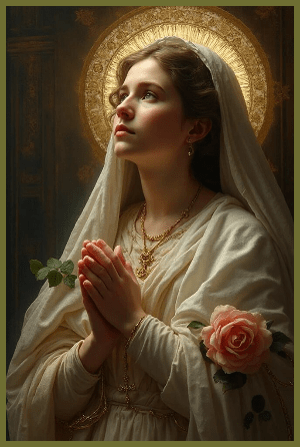
The New Adam and New Eve concept signifies a desire for a perfect partnership in humanity’s creation narrative. According to Genesis 2:18, “It is not good for the man to be alone. I will make a helper suitable for him.” Here, Eve is depicted as being formed from Adam to initiate the formation of a human family and, more broadly, to cultivate a community characterized by love and harmony. This community is intended to reflect the love and communion inherent in the Tri-personal nature of God, sharing in the divine communion of the Holy Trinity.
However, Eve’s actions led to a pivotal moment of disobedience, enticing Adam to turn away from God. This disruption prompted God to promise the emergence of an immaculate woman whose offspring would ultimately restore grace to humanity, as foretold in Genesis 3:15. This significant promise indicated that the woman’s offspring would encompass all individuals regenerated through God’s grace, forming members of the Mystical Body, with the New Adam serving as the head.
For the New Eve to assume her role as the mother of this restored community, she needed to maintain a state of grace, free from the fall that characterized Eve’s initial disobedience. In this theological framework, the Virgin Mary is recognized as the woman who exists in a pure, innocent state, serving as Eve’s antitype in the divine plan for humanity’s re-creation and restoration to grace with God. Furthermore, it was essential for her to be in total opposition to the serpent, the embodiment of sin and death, as indicated in Genesis 3:14.
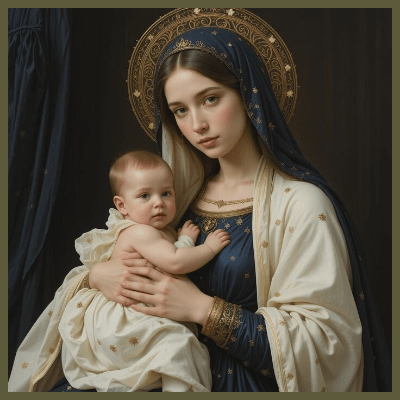
Therefore, the woman’s offspring encompasses all who have been regenerated through God’s grace as integral members of His Mystical Body, with Christ, the New Adam, as the head. In this theological framework, the New Eve symbolizes the mother of this re-created family and restored community. However, to fulfill this role, she must have remained untouched by sin, ensuring that she had never fallen from grace alongside her progeny and their new Head, as indicated in passages such as Luke 1:42.
Her existence required total enmity—complete opposition—against the serpent, who represents the author of sin and death. This profound opposition underscores her purity and capacity to bear the Redeemer. The Virgin Mary emerges as the woman in her original innocence, embodying a perfect antitype to Eve within the Divine order of humanity’s re-creation. Her immaculate conception and unwavering obedience to God serve as a pivotal foundation for the restoration of grace, highlighting her unique role in the salvific history of humanity. Through her, the potential for redemption is realized, allowing humanity to reconnect with the divine life of grace in communion with God.
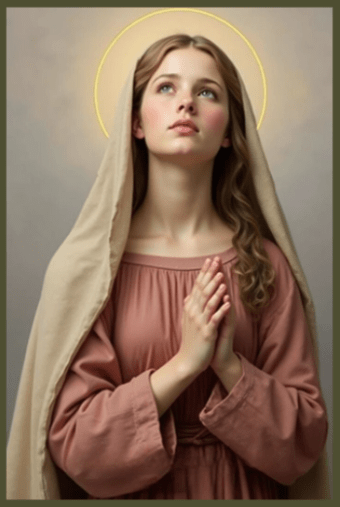
In the Letter to the Romans, St. Paul discusses the internal struggle caused by original sin, stating, “I see another law in my members fighting against the law of my mind and captivating me in the law of sin that is in my members” (Rom 7:23). This passage highlights the moral consequences that arise from original sin. When God sanctified or justified Mary’s soul at her conception, He did so in a unique and extraordinary way, ensuring that she was free of any moral defects. This exceptional grace was not the result of Mary’s own merits but was bestowed upon her out of the Father’s deep love for the Son (Jn 15:20). God’s intervention was subtle yet profound, allowing Mary to experience no internal conflict in her soul. Her physical nature did not wage a battle against her will; instead, her lower nature did not oppose her higher nature, which embodies the divine image and her authentic, deified self.
The complex nature of humanity often includes dark aspects that arise from a fundamental rebellion against God. However, these elements should not obscure the extraordinary grace that filled Mary’s soul. According to theological beliefs, God granted Mary a unique exemption from the law of sin, which traditionally impacts all of humanity. This exemption allowed her soul to maintain a supernatural harmony with God. The abundant grace given to Mary is thought to have protected her from committing any sin, whether mortal or venial, as referenced in scripture (Eph 3:20; Jude 1:24-25). Consequently, her spiritual faculties remained untainted by any disharmony typically associated with human nature.
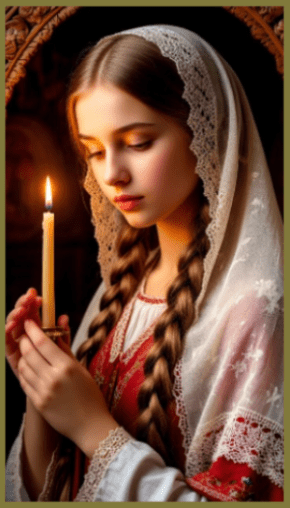
Mary is often described as possessing a remarkable intellect free of ignorance and error. Her will is believed to align perfectly with the Divine will, demonstrating a unique obedience that avoids the obstinacy that can sometimes obstruct adherence to God’s desires. Furthermore, her senses are noted for not becoming overly preoccupied with material concerns, allowing her to maintain a strong focus on spiritual matters. Significantly, no negative thoughts or disordered passions are attributed to her character, which is consistent with the belief that she was created holy and perfect by God. In Catholic theology, the Virgin Mary’s Immaculate Conception endowed her with a preternatural moral state of perfect holiness and freedom from all sin, including original sin and its effects. This condition is often described as her possessing sure “preternatural gifts” that were lost to the rest of humanity after the Fall of Adam and Eve. This divine recreation enabled her to be the ideal mother of Jesus, the Son of God. To fulfill this role, Mary’s love for God the Father, while finite, is understood to reflect the Son’s love for the Father as closely as possible, a capacity enhanced by divine grace.
Catholics believe that Mary, like all humanity, was initially subject to the stain of original sin and thus needed redemption (as referenced in Romans 5:18). However, the doctrine of the Immaculate Conception conveys that Mary experienced a unique and complete form of redemption, grounded in Christ’s anticipated merits. According to this belief, God bestowed His grace upon Mary so that she would not be inclined to sin by nature. While humanity’s salvation can be likened to being rescued from sin, Mary’s redemption is viewed as a protective measure: she was preserved from ever entering sin. In this context, Mary’s redemption is described as preservative, contrasting with the curative redemption experienced by others, who bear the consequences of the original sin caused by a pivotal free choice made at the dawn of humanity.
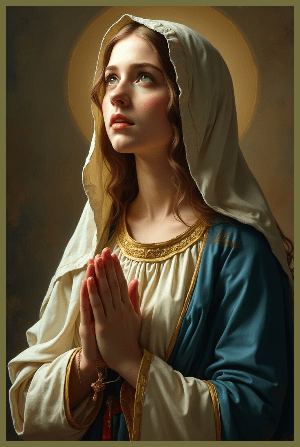
In Romans 5:19, Paul states, “Many (polloi) were made sinners.” He is not contradicting himself by not using the word “all” (pantes), as he means to convey that all people are subject to original sin, but not everyone actively rejects God. When he speaks in a distributive sense, he does not mean that every individual who has ever lived has sinned without exception, since infants and mentally disabled individuals cannot sin in the same way, at least not subjectively or with moral responsibility. The act of sin requires full knowledge and complete consent on the part of the individual. However, they would likely sin under normal circumstances because they fall short of God’s glory due to their lower nature as part of humanity. Infants and young children who have not yet reached an age of moral reasoning do indeed suffer and die. Nevertheless, they have not committed any personal sins during their brief lives. All humans share in Adam’s sin by association.
In this context, Mary is recognized as an integral part of God’s plan for redemption. Her redemption is distinct and represents the highest form of grace, a privilege granted solely to the Mother of God. This grace is not a result of her inherent merit but a manifestation of God’s mercy. It is important to note that this does not diminish His justice; original sin is considered a collective rather than a personal sin, arising from humanity’s connection to Adam, our primordial ancestor. As a result of original sin, individuals are conceived and born with a diminished nature, lacking the divine life of grace. However, being created in the divine image remains intact despite Adam’s sin. Therefore, there is a call to transcend our flawed and imperfect human nature by embracing transformation through divine grace. This transformation is essential for attaining the holy life that God originally desired for humanity in His goodness.
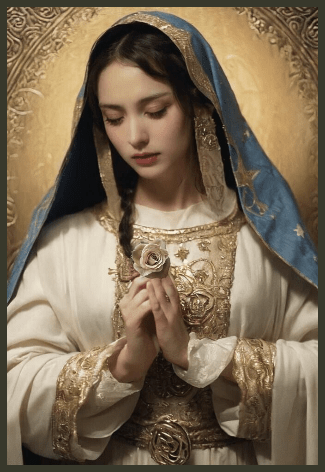
Mary is uniquely recognized as having been preserved from original sin by divine grace, a theological concept. Unlike Eve, who was tempted by the forbidden fruit, Mary was not drawn to sin. Instead, she was endowed with an abundance of grace that empowered her to consistently accept God’s will, despite the challenges and temptations presented by the world around her. This special grace directly opposes Mary to worldly distractions and the Tempter. Mary remained faithful to her covenant with God throughout her life, exemplifying unwavering commitment and integrity. Her soul is often celebrated for magnifying the Lord, showcasing her profound relationship with the divine.
Mary was given the freedom to choose between a life devoted to God and one that led away from Him, and she decided with a willing heart, never feeling compelled to turn away from His call. As the Daughter of Zion, she embodies the ideal of grace, having been created and restored to God’s favor even before the burdens of sin could take hold at birth. This mirrors the story of Moses, who was born free in Egypt to lead his people to liberation.
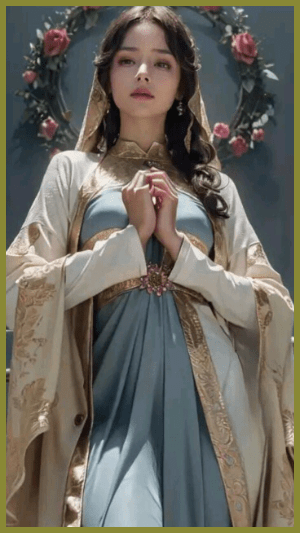
When the Lord restored the fortunes of Zion,
we were like those who dreamed.
Our mouths were filled with laughter,
our tongues with songs of joy.
Then it was said among the nations,
“The Lord has done great things for them.”
The Lord has done great things for us,
and we are filled with joy.
Psalm 126, 1-6
The text from Psalm 126 speaks to a time of restoration and joy for the people of Zion after a period of suffering and exile. It captures the emotional response of a community that has experienced divine intervention and liberation, with imagery that emphasizes laughter, songs of joy, and recognition of God’s marvelous deeds. This psalm celebrates the transformation from despair to hope, underscoring the belief that God has acted on behalf of His people. In its primary context, Zion can be understood as a representation of Jerusalem, the center of Jewish worship and identity. The restoration referred to in the psalm likely alludes to the Israelites’ return from Babylonian exile to their homeland, a moment celebrated as the fulfillment of divine promises. The collective joy expressed in these verses highlights how the nation’s fortunes are intertwined with their covenant relationship with God, reflecting a deep sense of national and spiritual revival.
Connecting this psalm to Mary’s Immaculate Conception involves interpreting Mary as a key figure in Christian theology, often seen as the fulfillment of prophecies about Zion. According to Catholic tradition, the Immaculate Conception refers to Mary being conceived without original sin, preparing her to be the Mother of Jesus Christ. Just as Zion is depicted as the recipient of God’s restoration and joy, Mary embodies this new aspect of Zion, bringing forth the Messiah who will ultimately fulfill God’s promises. Mary, in her purity and grace, symbolizes the ideal daughter of Zion. She is seen as the one who bridges the Old Testament prophecies with their New Testament fulfillment in Christ. In her Magnificat, Mary echoes the psalm’s themes by expressing joy and gratitude for what God has done, likening herself to the restored Zion, filled with laughter and joy.
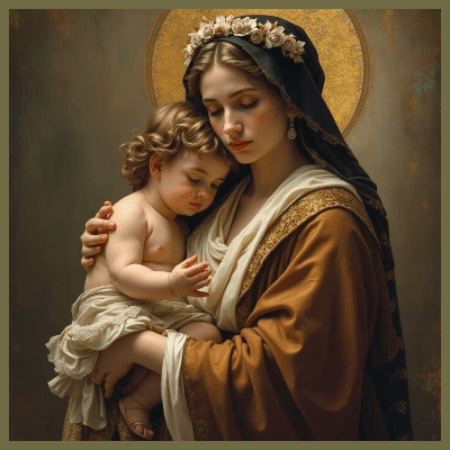
How long wilt thou be dissolute in deliciousness, O wandering daughter?
for the Lord hath created a new thing upon the earth:
A woman shall compass a man.
Jeremiah 31, 22
The text from Jeremiah 31:22 speaks to a profound and transformative moment in the prophetic tradition of Israel. In its primary context, this passage addresses the people of Israel, often referred to in biblical literature as “Daughter Zion.” This personification represents Jerusalem and, by extension, the entire nation of Israel. The phrase “how long wilt thou be dissolute in deliciousness” conveys a call to repentance and a recognition of Israel’s waywardness and indulgence, underscoring the need for spiritual renewal. Jeremiah’s prophecy focuses on Israel’s deviation from God due to the worship of false idols associated with surrounding pagan nations, resulting in a breach of their covenant with Him. The prophet foresees a future time when God will infuse His spirit into His faithful people, encouraging them to renounce these false idols and return to Him. The figure of Daughter Zion represents God’s wayward bride, who will strive to draw closer to her Husband and seek His favor. With God’s spirit guiding her, she is poised to find a path to reconciliation as His devoted spouse, ultimately aiming for liberation from foreign captivity.
The statement, “for the Lord hath created a new thing upon the earth: A woman shall compass a man,” can be interpreted in various ways. Historically, it has been understood as a sign of hope, indicating that, in the midst of Israel’s suffering and exile, God is introducing a new dynamic in human relationships. This theme has often been associated with the coming of the Messiah, which, in Christian tradition, is seen as fulfilled in the figure of Jesus Christ, born of the Virgin Mary.
In this light, the Virgin Mary becomes a crucial figure connecting this prophecy to the concept of the Immaculate Conception. Mary, as the “Mother of God,” embodies the new thing that God has initiated—an immaculate woman who bears and nurtures the Messiah. The connection to “Daughter Zion” can also highlight Mary’s role in fulfilling Israel’s hope. Just as Daughter Zion represents the faithful remnant of Israel, Mary exemplifies perfect faithfulness and obedience to God. Her acceptance of the angel Gabriel’s message in Luke 1:38 (“Let it be to me according to your word”) resonates with the call to Israel to return to God, embodying the new covenant inaugurated by the coming of Christ.
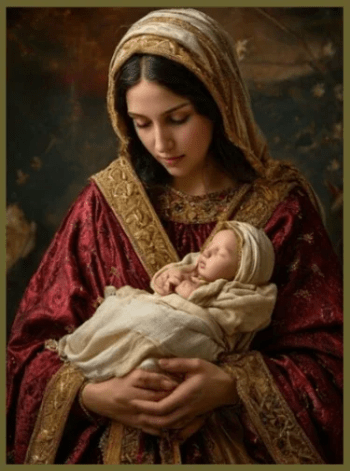
From another perspective, in classical Jewish theology, Genesis 3:15 introduces the concept of the Free Woman of Promise, often interpreted as symbolizing the faithful Daughter Zion. This figure represents the lineage through which righteous individuals, starting with Abel and ultimately culminating in the Messiah, will emerge. Throughout this narrative, the Hebrew people transition from their initial state of paganism to being recognized as God’s chosen people, serving as His faithful and pure spouse. This transformation establishes them as a holy nation, consecrated through a covenant with God. This covenant is significant because it ensures the Messiah’s arrival in a manner befitting His role, ultimately bringing blessings to all nations. The concept of the faithful Daughter Zion reaches its pinnacle in the figure of the Blessed Virgin Mary. Her unwavering fidelity to God allows her to give birth to the Messiah, as she invites Him to become incarnate through her faith and purity of love, even in the face of humanity’s indifference to sin.
Jeremiah’s prophecy finds its ultimate fulfillment in the figure of the Blessed Virgin Mary. In her, a transformation occurs in which Eve is re-created to reflect her original state before the Fall. Mary is recognized as the spiritual “mother of all the living” and embodies the faithful Daughter Zion, nurturing all of God’s righteous children, as referenced in Psalm 87:5. In a significant act of divine favor, God looks upon Mary’s humility and elevates her from her modest beginnings, distinguishing her from sinful humanity. She becomes not only God’s faithful and chaste spouse but also the mother of the Divine Messiah. Through the Holy Spirit, God enables Mary to express her devotion fully, allowing her to maintain a loving relationship with Him as His immaculate bride and the mother of His Only Begotten Son.
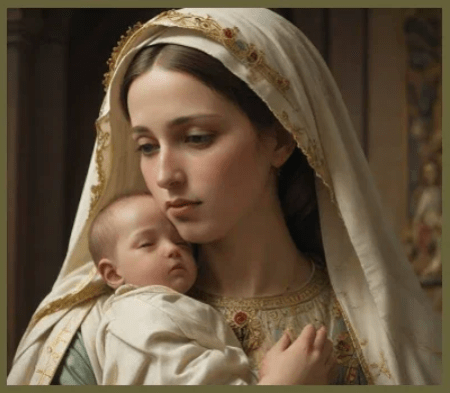
In Marian theology, Mary is often referred to as the New Eve, symbolizing a transformative figure who transcends the world’s temptations. Through her faithful commitment as a virgin spouse of the Holy Spirit, she embodies a restoration of grace for humanity, particularly for those who have fallen short. Mary is seen as having been liberated from the bonds of sin by God’s grace, which allows her to maintain a deep and attentive relationship with God. This relationship is characterized by her listening to and embracing His word, which she holds in her Immaculate Heart. Mary is depicted as the Lord’s handmaid as unwaveringly faithful to her covenant with God. Her role is significant, for her soul reflects God’s glory—a divine glory essential to humanity, especially in light of the personal sins that arise from a heart hardened by selfishness, as noted in Romans 3:23.
The Blessed Virgin Mary holds a significant place in Christian theology. It is believed that God infused her with His Spirit and granted her a pure heart, free of idolatry. From the moment of her conception, she was sanctified by divine grace, which ensured that she would not experience spiritual exile or alienation from God. This sets her apart from those who may stray from the path leading to eternal life. In biblical prophecy, Mary is identified as the instrument through which the Son of God, referred to as Emmanuel (meaning “God with us”), was born, as noted in Isaiah 7:14. The Gospel of John (1:14) emphasizes the importance of this event, stating that a woman gave birth to a man who is God incarnate. Mary is also depicted in the Book of Revelation (12:1) as a powerful symbol: a woman clothed with the sun, standing on the moon, and crowned with twelve stars, representing her exalted status and her role in salvation history as prophesied by the prophets.
“The Holy Virgin is herself both an honourable temple of God and a shrine made pure, and a golden altar of whole burnt offerings. By reason of her surpassing purity, she is the Divine incense of oblation (προθέσεως), and oil of the holy grace, and a precious vase bearing in itself the true nard; yea, and the priestly diadem revealing the good pleasure of God, whom she alone approaches holy in body and soul. She is the door that looks eastward, and by the comings in and goings forth, the whole earth is illuminated. The fertile olive from which the Holy Spirit took the fleshly slip (or twig of the Lord, and saved the suffering race of men. She is the boast of virgins, and the joy of mothers; the declaration of archangels, even as it was spoken: “Be thou glad and rejoice, the Lord with thee”; and again, “from thee”; so that He may make new once more the dead through sin. ”
St. Gregory Thaumaturgus
On the Holy Mother of God
(A.D. 270)
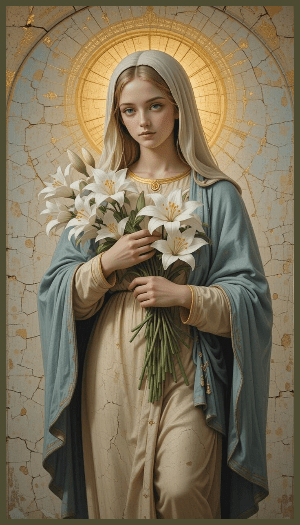
My dove, my undefiled, is but one;
she is the only one of her mother,
she is the choice one of her that bore her.
The daughters saw her, and blessed her;
yes, the queens and the concubines,
and they praised her.
Song of Solomon 6, 9

SALVE REGINA
 Salve Regina